Sc. 04
The makers
In the studios of Sidi Ghanem and at the looms, the wool, the clay and the people quietly changing what Moroccan design looks like. You learn to read a rug the way the woman who made it does.



Morocco sits where Africa, Europe and the Middle East have been meeting for a thousand years, and Marrakech is where you feel it. The old city is unapologetically itself: loud, rugged, fragrant with charcoal and mint, grounded in the lives of the people who have moved in and out of its walls for centuries. You take it in from inside the Royal Mansour, in a riad of your own with a courtyard, a rooftop and a silence that starts the moment the door closes. By day, the medina with someone who knows it as home, the blue of Majorelle, the workshops where Moroccan design is being made now. By night, the square.
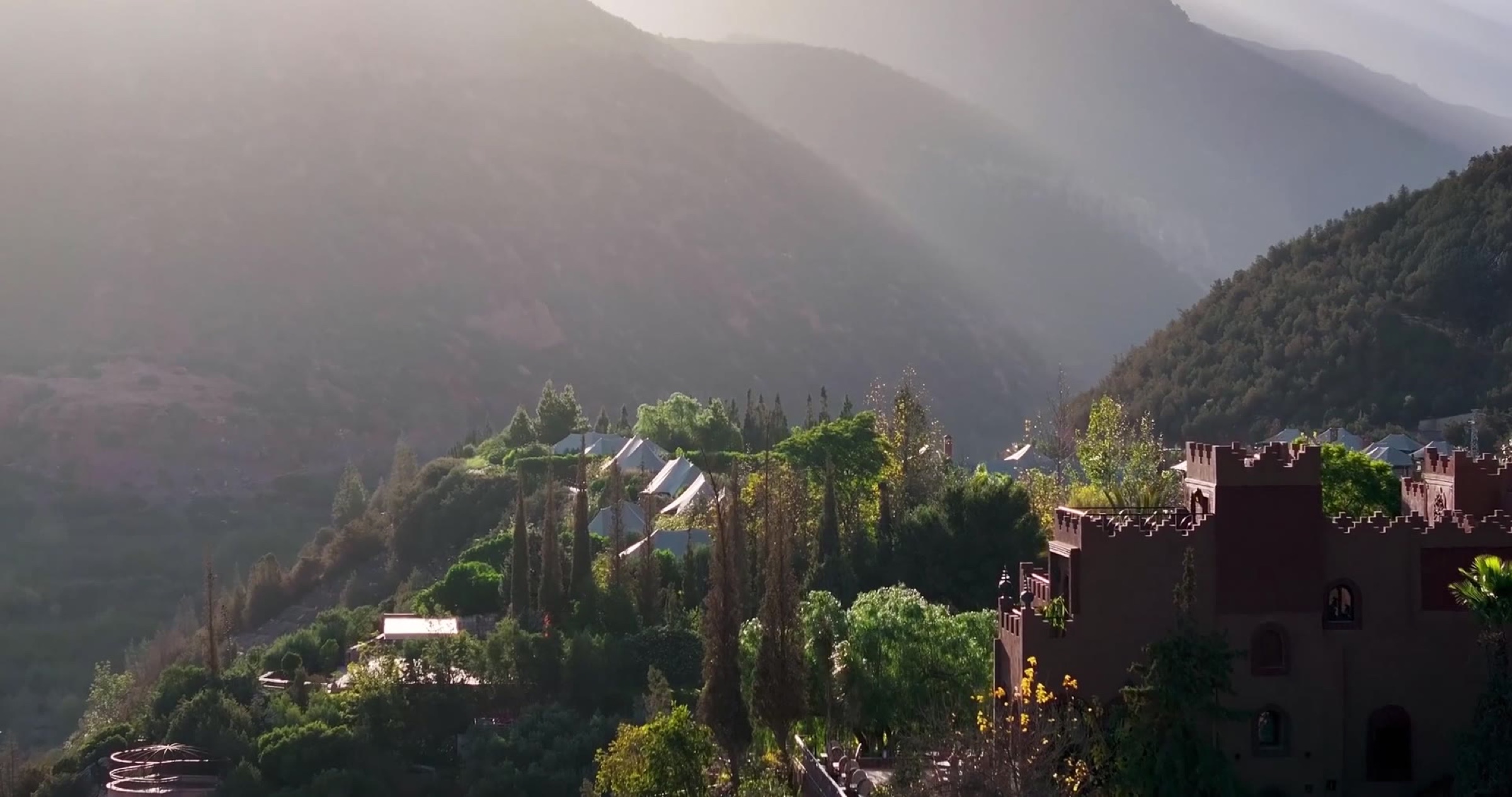
Then the road turns south. The air cools, the Atlas rises ahead of you, and within the hour the city is a rumour. Kasbah Tamadot sits above the Asni valley with the highest peaks in North Africa behind it, and for three nights the country tells you the same story more quietly: bread from a village oven, tea on a terrace, a walk between Berber villages, dinner as the valley goes dark. Six nights, two houses, a small group, and time built into every day on purpose.
In the studios of Sidi Ghanem and at the looms, the wool, the clay and the people quietly changing what Moroccan design looks like. You learn to read a rug the way the woman who made it does.
Palm groves, then red earth, then switchbacks. The air thins and cools, the first snow often sits on the peaks by November, and the valley opens below you as the kasbah comes into view.
A clay oven, a flat loaf torn while it is still too hot, mint tea poured from a height. A walk between terraces, and a conversation you could not have arranged yourself.
A fire, a tagine that has been on since the afternoon, the last light moving up the mountain. Then the stars, closer than they ever are in the city.
The medina taught its architecture to deal with heat: thick walls, a tiled courtyard, a fountain doing the work of the air. At Royal Mansour the riad is yours, rooftop included, and the city is a sound somewhere beyond the door.
Jacques Majorelle planted it and painted it that particular blue. Yves Saint Laurent and Pierre Bergé saved it in 1980. Next door, the museum holds the couture and the sketches. Cool, quiet, and worth the whole morning.
Jamaa El Fnaa turns over as the sun goes. Lamps come on across the stalls, smoke lifts off the grills, and somewhere behind you a drum starts and does not stop. You walk it slowly, with someone who knows which stall to trust.
The shape of the week. Pace is unhurried by design: late starts, open afternoons, and room to stay longer where something catches you.
Fast-track at Marrakech Menara and a private transfer to Royal Mansour, where your riad is waiting. Settle in on the rooftop. As the light goes, walk into Jamaa El Fnaa with your host and let the square do the rest.
A slow morning in the old city with a local host who knows its doors. In the cool of the afternoon, Jardin Majorelle and the Yves Saint Laurent Museum. Dinner in the lantern-lit gardens at Bo Zin.
The design studios of Sidi Ghanem with the doors open, then the looms and the women who weave. The afternoon is yours: the spa, the pool, or the rooftop and a book.
The road leaves the palms behind and climbs for about an hour to Asni. Kasbah Tamadot sits above the valley with the High Atlas at its back. Lunch on the terrace, and nothing planned until dinner.
Bread from the village oven, tea on a terrace, a walk between fields and houses. The Eve Branson Foundation shows you the craft and education work that stays behind after the visit.
Walk out with a mountain guide, swim, take the hammam, or do none of it. A last long dinner together as the valley goes dark below.
Breakfast with the mountain vista, then the drive down to Marrakech Menara for onward flights. We can add nights before or after.
If you want more of Morocco before or after the week, our travel designers will build it around you. We know the country and its people well, and the places worth the detour.
The dunes of Erg Chebbi at Merzouga, a camp under more stars than you knew were there, and a silence that has weight.
The oldest imperial cities and their medinas, a UNESCO World Heritage Site where scholars and craft passed down for generations.
Over the Atlas to a kasbah in the Skoura palm grove, on the edge of the desert. Meals turn up where you least expect them, and the walls keep secrets for you to find.
Anything arranged separately can be added on request.
November is the settled season: warm, clear days in Marrakech, cold nights in the Atlas, and the summer crowds long gone.
Mild days, snow still on the high peaks, the Atlas at its greenest.
Marrakech runs hot. The mountains stay cooler, which is why Marrakchis head for them.
Warm days, clear light, cool evenings. November is when we go.
Crisp, bright days in the city, fires lit in the mountains.
Two houses, two registers. Royal Mansour puts you in the medina walls in a riad of your own. Kasbah Tamadot holds the last three nights in the High Atlas, where the air is cooler and the pace slower.
2027 departure hotel
Built by the King of Morocco and made by Moroccan craftsmen, the palace is a small medina of private riads, each on three floors with its own courtyard, rooftop and plunge pool. Nights one to three.
Richard Branson found this mountain retreat from the air on a ballooning expedition and bought it. Rooms are individually decorated with antiques from around the world, and the pool looks straight at the mountains. Nights four to six.
Dates and price for Morocco are being confirmed. Register your interest and you hear first.
Medina days are on foot at an easy pace. In the Atlas, walks between villages are guided and shaped to the group, and every one of them is optional.
Warm, clear days in Marrakech and cool evenings. The mountains are colder, with properly cold nights, so bring a layer.
Fly into Marrakech Menara. Fast-track on arrival, then a private vehicle for the week. The drive to Kasbah Tamadot takes about an hour.
A small group of up to eight guests, hosted by Satopia throughout.
Yes. We can add nights before or after, in Fez and Meknes, the Sahara or at Dar Ahlam in the Skoura palm grove, and shape experiences around your interests.
Speak to us. Both properties welcome families and we can adjust the pace and the programme.
Join the guestlist for the next group departure, or request a private experience.
Our experiences are designed with sustainable and responsible travel principles in mind, the need for careful planning and management as tourism grows.
Our ImpactDiscover how travel can help restore and preserve nature. By choosing sustainable options, you contribute to vital conservation efforts.
Explore Nature RestorationB Corp Certification signifies verified performance, accountability and transparency across a company’s entire social and environmental impact.
About B Corp