
The Grand Egyptian Museum – A Love Letter to Civilisation
It has taken Egypt twenty years to build its new wonder. The same stretch of time it once took to raise a pyramid has been devoted to creating a monument not of stone, but of memory and meaning.
By Ahmed Gouda, Satopia CEO, Co-founder
Standing on the edge of the Giza Plateau,
the Grand Egyptian Museum, or GEM gazes directly at the Great Pyramids through a vast glass wall, as if in conversation with them. It is a view that binds past to present, heritage to hope.
As an Egyptian born and raised amid this landscape of deep time, visiting GEM feels both intimate and immense. I have visited my share of cultural institutions, widely from the British Museum to the Met, from the Louvre to small forgotten towns where Egyptian treasures rest behind glass, displaced yet admired. But walking through GEM is something else entirely. It is not a display of trophies. It is a homecoming. Every artefact, every carefully restored fragment, has been brought back to its rightful context. This is not Egypt shown to the world — it is Egypt showing the world itself.
The Grand Egyptian Museum is the largest museum on Earth. Twice the size of the British Museum, five times the scale of the Met, it stretches across nearly half a million square metres. It is a city within a city. Inside, over one hundred thousand artefacts narrate the story of a civilisation that predates history itself. From pre-dynastic pottery to the golden shimmer of Tutankhamun’s world, each object tells of the human spirit’s ingenuity, endurance and imagination. The museum’s collection spans not only the millennia of ancient Egypt, but the continuity of a people who have lived and created on the same land for thousands of years. Few cultures can claim such unbroken existence. Perhaps only China or Mesopotamia echo this profound lineage of civilisation that continues to this day.
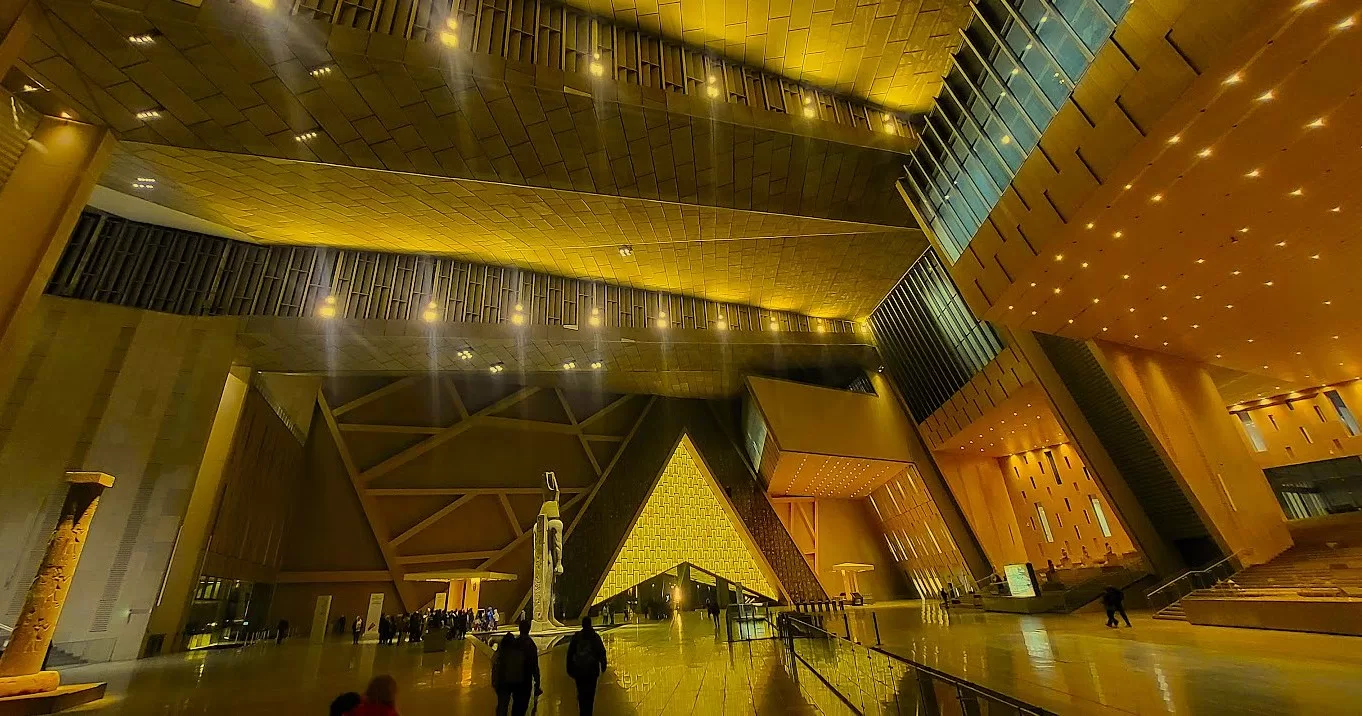
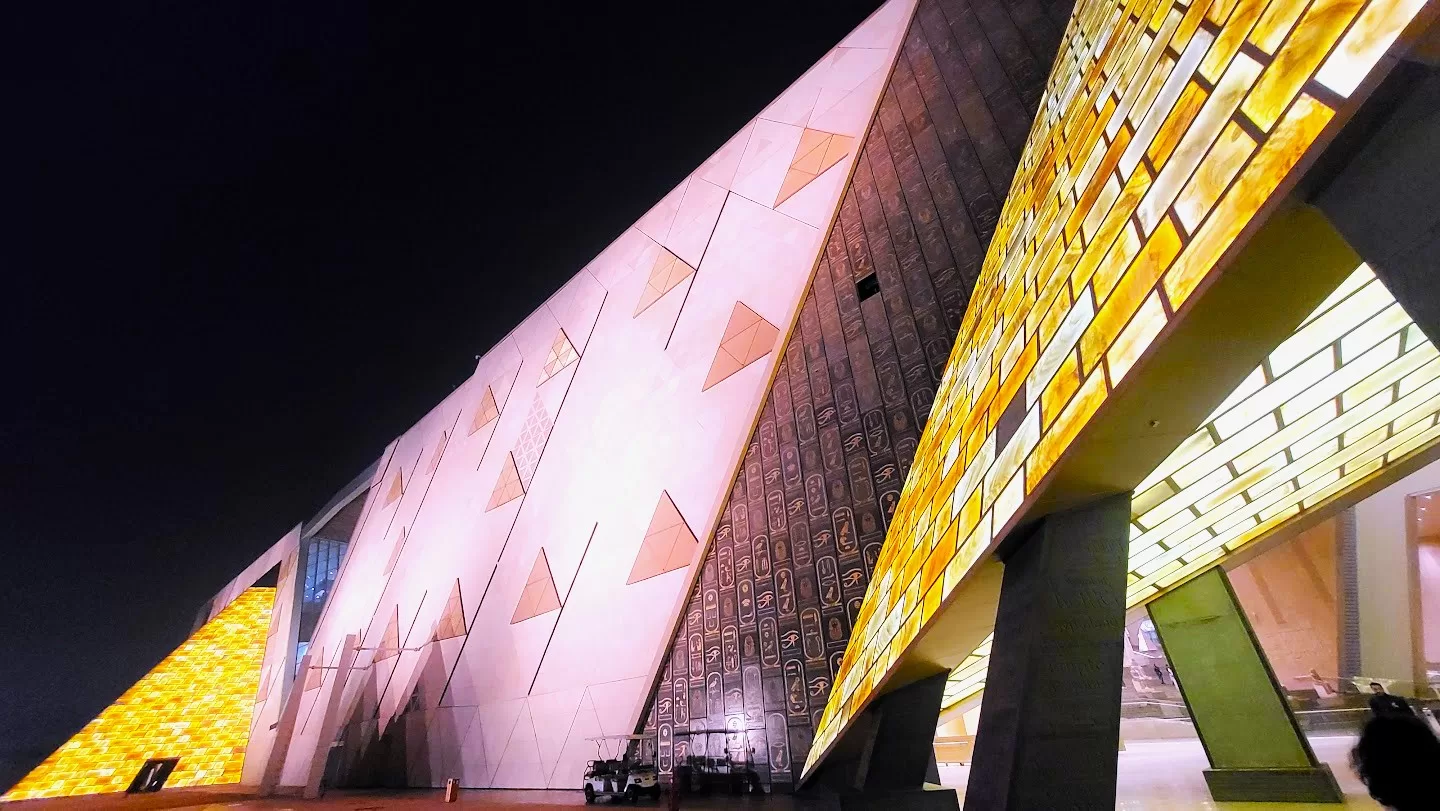
The museum’s architecture, designed by Heneghan Peng, captures this dialogue between antiquity and innovation. Its monumental façade rises in warm desert tones, aligning geometrically with the pyramids just beyond. The vast atrium, flooded with soft light, centres around a colossal statue of Ramses II, once the sentinel of Cairo’s Ramses Square, now standing as the guardian of GEM’s entrance. Around him, monumental sculptures and sacred relics form a procession leading visitors through centuries of art and ingenuity.
There is poetry in this arrangement. From the first carved stone to the latest piece of conservation technology, the museum embodies Egypt’s message to the world — that heritage is not static, but alive. The opening of GEM is not only a cultural milestone for Egypt and Africa but also a global act of preservation, a declaration of peace and unity through art. It celebrates national pride without aggression, creativity without conquest, and a universal understanding that humanity’s shared story is richer when told together.
“There is no place like Egypt. And there has never been a moment quite like this one.”

Beyond its galleries, the GEM houses the largest conservation and restoration centre in the world, encompassing a vast complex of laboratories and workshops dedicated to scientific Egyptology. Here, the art of preservation reaches a new height. Specialists from across the globe work alongside Egyptian experts in state-of-the-art facilities, restoring delicate papyri, ancient textiles, statues, and wall paintings with precision and care. The laboratories themselves are monumental in scale, forming the beating heart of the museum.
This integration of scholarship and artistry sets GEM apart. It is not only a showcase for a civilisation but a living institute for research, learning, and innovation. Within its conservation labs, centuries-old pigments are analysed with modern spectrometers; ancient materials are studied at a molecular level to ensure their survival for generations to come. The museum is redefining global standards in cultural heritage preservation, and in doing so, reasserting Egypt’s leadership in the very discipline it inspired.
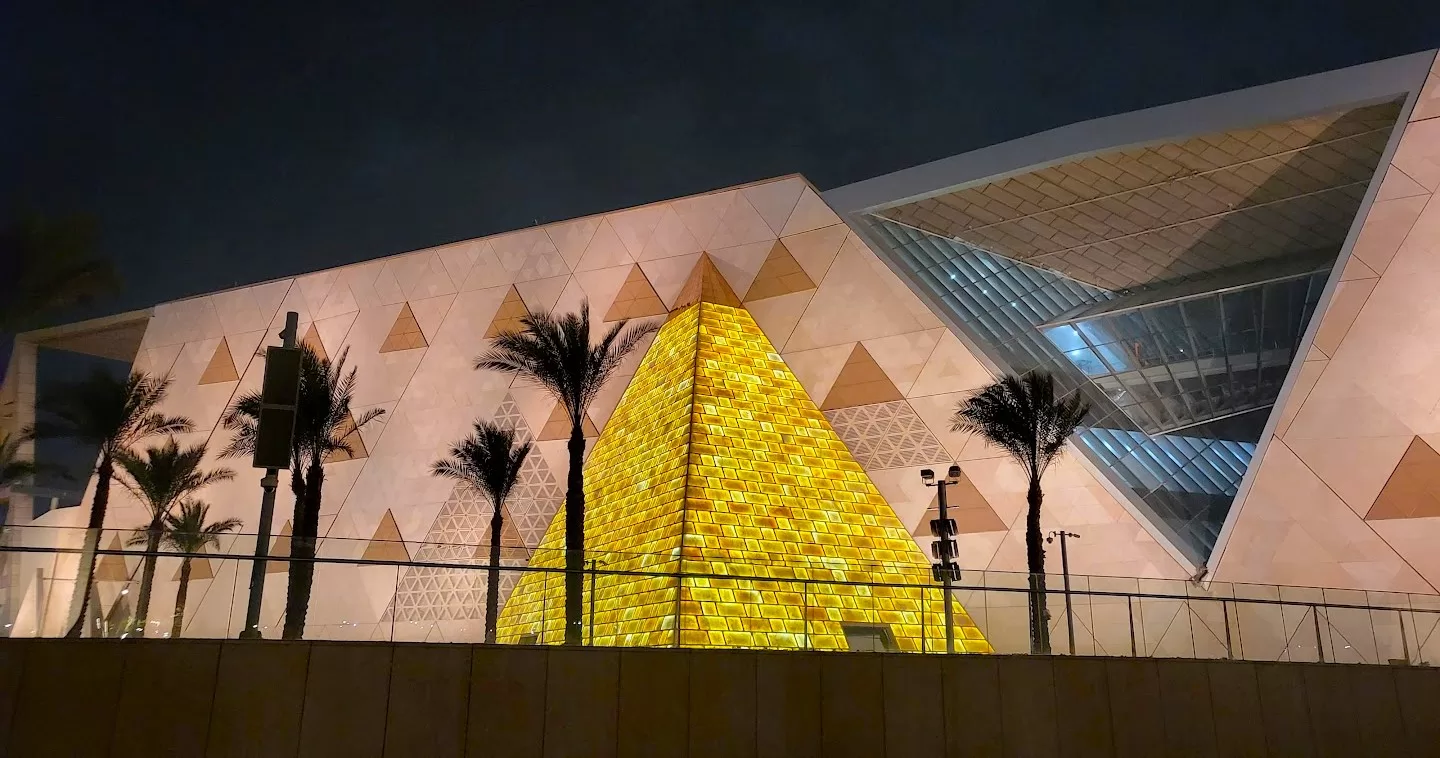
Image credit: Ahmed Gouda
Walking through its galleries, one feels an extraordinary calm. The objects seem to breathe again, restored to a rhythm that feels both ancient and new. I was mesmerised by the meticulous curation — every piece documented with scholarly precision, every space designed to preserve and to inspire. The museum integrates conservation laboratories, research centres, and public plazas that invite reflection and community. It is a cultural hub that connects not just artefacts but people, bridging the ancient with the contemporary, Egypt with the world.
From certain points within the museum, you can look through that great expanse of glass and see the pyramids in the distance. The view is deliberate, a gesture of reverence and continuity. It reminds visitors that the same ingenuity which once raised those timeless forms still flows through this land. The descendants of those builders have created another wonder, not by replicating the past, but by reinterpreting it.
There is a quiet pride in that. Egypt has always been more than the sum of its monuments. It is a living civilisation that continues to express its identity through innovation, artistry, and resilience. GEM captures this essence in the same way Egyptian culture renews itself without severing its roots. It stands as both archive and aspiration, a repository of history and a symbol of the nation’s enduring creativity.
What this place means for the world is more than a sum of its priceless treasure. It is a reminder that civilisation is a shared inheritance, that the art of one nation enriches us all. The Grand Egyptian Museum is a destination and a testament to what humanity can build when it chooses to remember. For travellers seeking depth, meaning, and connection, Egypt today offers experiences beyond imagination. From the timeless temples of Upper Egypt to the vibrant pulse of modern Cairo, this land invites you to rediscover the origins of art, architecture, and the human spirit itself. Visiting GEM is not only to see history; it is to feel its pulse. Its vitality, alive, radiant, and renewed.


Satopia is a global community of inspirational people empowering humanity with passion and purpose.
READ NEXT

New Extra Star for the Star Chef Dominique Crenn