

How AI Creates Space for a More Expansive Human Experience
Modern life asks the human mind to play two roles at once: the visionary and the administrator. One dreams, imagines, questions, seeks. The other keeps track of appointments, emails, logistics, reminders, and the endless stack of small necessities that, quietly but relentlessly, claim the landscape of our attention.
For most of us, the administrative role wins. Not because it is more meaningful, but simply because it is louder.
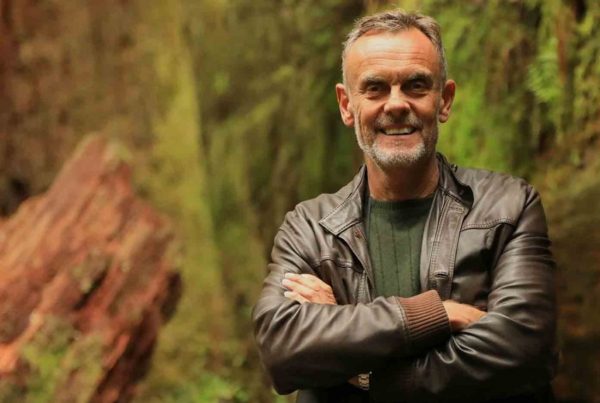
A Satopia Perspective by CEO, Emma Ponsonby
What becomes possible when the mind is no longer consumed by the background noise of daily management?
And what happens when technology, used consciously and with discernment, begins to absorb these smaller tasks, offering us something far more precious than convenience? It offers space to think beyond what must be done on a daily basis, to rediscover curiosity, and to allow the mind to return to its more expansive nature.
The Psychology of Mental Space
In cognitive research, this phenomenon is often described as cognitive offloading—a shift in which external systems carry certain responsibilities so that the mind may focus on more complex or meaningful forms of thought. Studies from the University of Texas (Risko & Dunn, 2015) and later research published in Nature Human Behaviour (Gilbert, 2021) demonstrate that when we reduce the cognitive burden of routine tasks, our capacity for insight, creativity, and reflective thinking increases.
When the mind is no longer stretched thin across dozens of minor details, it becomes more available for the deeper work: synthesising ideas, exploring meaning, engaging with new concepts, and noticing the subtleties that shape our inner and outer lives.
The benefit is not simply efficiency, it is depth of mind, thought and conscious awareness.
The Role of AI in Expanding Human Thought
Used consciously, AI becomes a quiet infrastructure beneath daily life—a supportive architecture that holds the smaller pieces so the mind can inhabit a wider horizon. It need not diminish intellect. Could it refine our ability to focus?
Instead of tending constantly to the mechanics of living, we can participate more fully in the experience of living. The difference is subtle but profound. When our thoughts are not perpetually fragmented, they begin to stretch again. They roam. They connect unexpected ideas. They return to questions long postponed for lack of mental room.
At Satopia, we have witnessed this shift internally, conversations that once hovered around planning now naturally gravitate toward exploration—ideas, human behaviour, creativity, and the ways we grow through travel, connection, and experience. AI did not create this curiosity, but it created the condition in which curiosity thrives.
A More Spacious Kind of Thinking
When mental space expands, it changes the quality of our internal architecture. We begin to observe our own patterns with more clarity. We notice the beliefs that subtly shape our decisions. We question assumptions that once felt immovable. We find ourselves considering what is possible, not just what is necessary.
This is not an abstract concept; it is a psychological reality. Research from cognitive psychologist Nelson Cowan (2023) notes that when working memory is relieved of competing demands, higher-order reasoning becomes more fluid and more intuitive. What we call “clarity” is often simply the absence of cognitive congestion.
In this sense, the integration of AI becomes less about technology and more about creating the mental conditions for refinement—of thought, of perception, of self.
A Perspective for Those Drawn to the Larger Questions
Not everyone desires this shift, and there is nothing prescriptive in acknowledging that. Some find satisfaction in holding every detail personally. But for those who are drawn to a more expansive life of inquiry—those who sense that their best thinking happens when the mind is unencumbered—the conscious use of AI becomes a tool of liberation.
The Satopia Lens
Satopia’s world is built around bold ideas, transformative experiences, and the belief that the mind, when given space, naturally expands into richer terrain. We are not interested in technology for its novelty, but for its potential to create room for the conversations, insights, and connections that shape meaningful lives.
The future of thought is not defined by how much the mind can hold, but by how deeply it can think. The true value of technology lies not in acceleration, but in the spaciousness it creates—the room to imagine, to refine, to understand, and to grow.
When the mind is unburdened, it doesn’t retreat into smaller thinking, it creates a space for greater perspective with the right conscious guidance.
And in that expansion, we often rediscover the most human parts of ourselves.
The product name here. Learn more CTA here.



Satopia is a global community of inspirational people empowering humanity with passion and purpose.
READ NEXT